Why roommate disputes happen: the real causes explained
15 August 2026
13 min read
Discover the real causes of roommate disputes and learn effective strategies to resolve them. Strengthen your living arrangement today!
Most roommate disputes start with a mismatch, not malice. Two people simply expect different things (a clean kitchen by evening, quiet after 11pm, an even bill split) and nobody said so out loud until the resentment had already built. You can usually tell within a week whether a problem is solvable in-house or heading somewhere worse.
Do three things immediately:
Say the issue in one calm sentence, at a neutral time, not mid-argument.
Note the pattern (dates, amounts, messages) so you are dealing with facts, not feelings.
Ask for a short sit-down within 48 hours rather than letting it fester.
If your roommate responds to a calm, specific request with a genuine change, this is solvable between you. If they deny it happened, escalate the blame, or the same issue recurs three times after being raised, you are past a normal disagreement and into territory that needs structure, a witness, or outside help.
Key Takeaways
Most roommate disputes come from unspoken expectations and avoidance, not deliberate malice, and explicit, early communication resolves them faster than accommodation ever does.
Point
Details
Name the category early
Most disputes fall into cleaning, bills, noise, guests, or space, so identify which one you're actually dealing with.
Avoidance costs more later
Explicit conflict resolution produced better outcomes and less distress than harmony-maintaining avoidance in university research.
Compromise isn't always healthy
One study linked repeated compromising with increased roommate victimisation, while social support reduced it.
Agree the rules before moving in
A written, signed, photographed house agreement prevents most predictable disputes.
Escalate on repetition, not first offence
Bring in a mediator or landlord once an issue recurs after being raised directly, not before.
Choose verified housemates from the start
Hauzed's verification and AI matching help reduce the odds of a mismatched living situation before it begins.
Common types of roommate disputes: the checklist every household sees
Roommate conflict tends to fall into a short, predictable list. Recognising which category you are actually in makes it far easier to find the right fix, rather than arguing about the argument itself.
Cleaning and chores. One person's "clean enough" is another's "disgusting". It usually starts with dishes left overnight, then escalates when nobody agreed whose turn it was.
Bills and shared expenses. Splitting utilities evenly when usage is not equal, or one person paying late every month, breeds quiet resentment fast.
Noise and sleep schedules. A night-shift worker and an early riser under one roof is a conflict waiting for a trigger, usually a slammed door at 6am.
Guests and overnight partners. Nobody minds occasionally, but "occasionally" becomes "every weekend" and suddenly the flat has a third resident nobody agreed to.
Food and shared supplies. Someone's labelled leftovers vanish, or the "shared" milk is only ever bought by one person.
Pets. Allergies, mess, and who actually walks the dog at 7am cause more flatshare breakdowns than people expect.
Privacy and space. Borrowing items, walking into rooms unannounced, or treating communal areas as personal storage.
Moving out and deposit expectations. Who gets what back, and who caused which damage, often surfaces only when someone is already leaving.
Nationwide's polling on shared housing found that a large majority of people who have lived with housemates report disagreements, and cleaning is the most cited cause of disputes, with bills close behind.
Pro Tip:Run a two-week "trial period" of house rules before anyone signs a tenancy agreement together. Draft the rules, live by them informally, then adjust and formalise what actually works rather than guessing in advance.
Why do small problems turn into big fights?
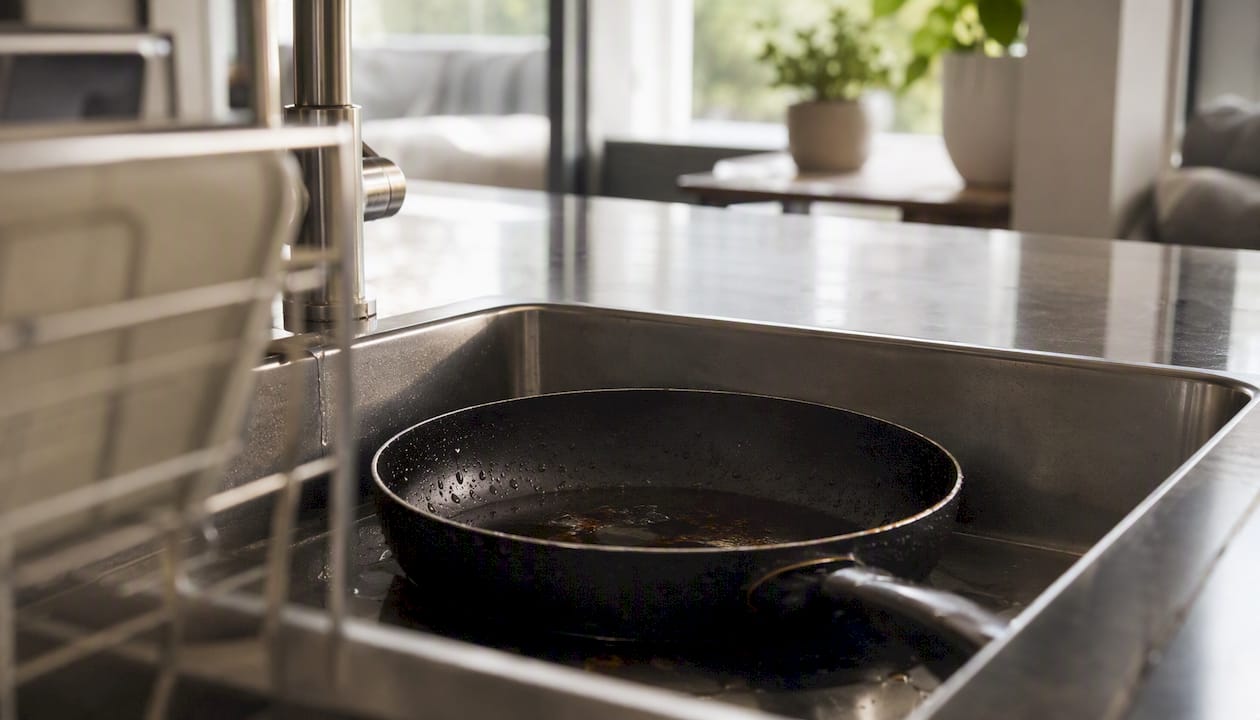
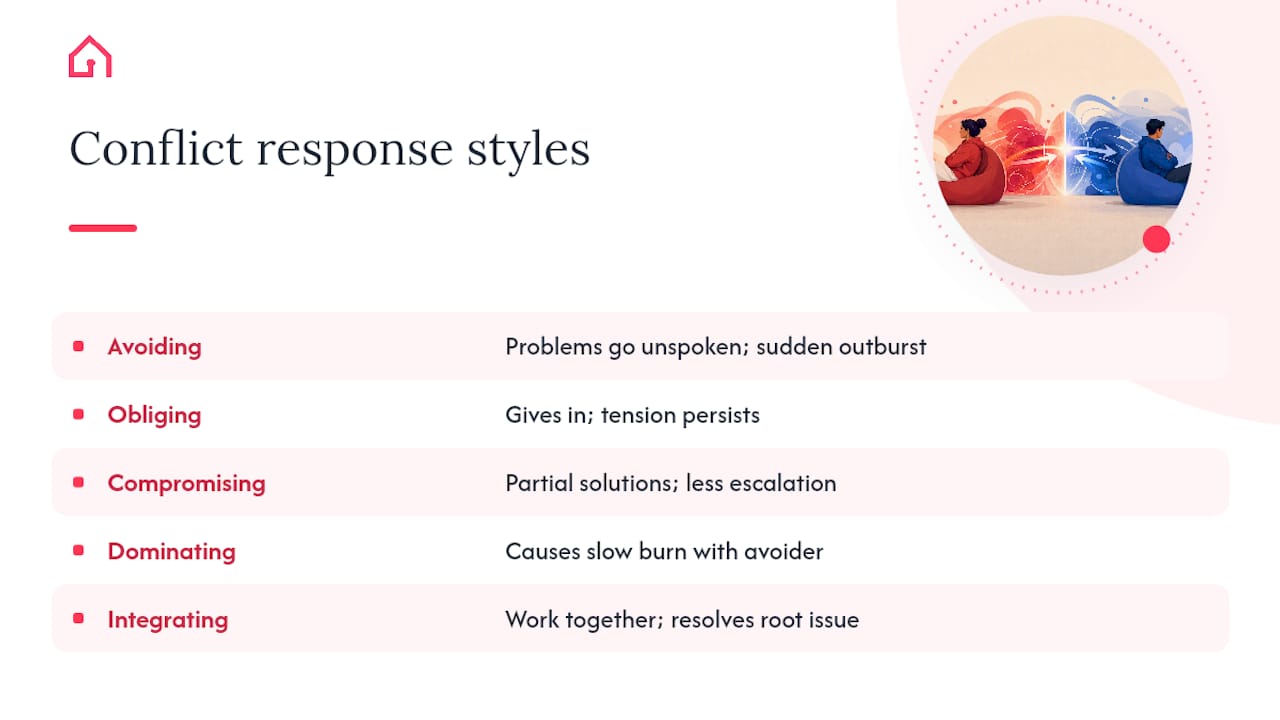
Two people can watch the same unwashed pan sit in the sink and have completely different reactions. That gap comes from conflict style, not the pan itself. Researchers group responses into patterns such as avoiding, obliging, compromising, dominating, and integrating (working together to solve the root issue), and personality preferences shape which style someone defaults to. A dominating personality paired with an avoiding one is a near-guaranteed slow burn: one keeps pushing, the other keeps swallowing it, until the avoider snaps over something unrelated.
Stress compounds this. Exam periods, tight finances, or a demanding new job all shrink a person's tolerance for friction. A late rent payment that would normally get a shrug becomes a screaming match because someone is already running on empty. This is why the "same" dispute can feel manageable one month and unbearable the next. Nothing about the flat changed; the people living in it did.
Consider two roommates with opposite styles: one avoids conflict entirely, hoping problems resolve themselves, while the other confronts everything immediately. The avoider stops mentioning the noise complaints, then moves out abruptly three months later, blindsiding the other person who thought everything was fine.
Most serious roommate conflicts follow a recognisable sequence: an unspoken expectation gets broken, the injured party goes passive-aggressive instead of direct, both sides start avoiding each other, then small tit-for-tat retaliations begin, and resentment hardens into something closer to bullying.
Watch for these warning signs before things reach that final stage:
Passive-aggressive notes or group chat messages instead of face-to-face conversation.
Covert "punishment", such as using someone's food or ignoring their post out of spite.
Repeated boundary crossing after being asked to stop, not just once.
One person managing the household almost entirely through a group chat, correcting the other publicly.
A typical example: a roommate feels the cleaning split is unfair but says nothing for weeks. Instead, they post a vague complaint in the house group chat ("some people never do their bit"). The other roommate feels ambushed rather than informed, gets defensive, and the real issue never actually gets discussed. This pattern of indirect confrontation through text rather than conversation is one of the fastest routes from irritation to a genuine rupture.
How to prevent roommate disputes before you move in
The strongest fix for most roommate conflict is agreeing on the rules while everyone is still calm and nobody has broken anything yet. Build a short written house agreement covering:
Quiet hours, and what counts as acceptable noise during them.
A cleaning rota, with specifics rather than vague "everyone pitches in" language.
A guest policy, including how many nights per week is reasonable before it counts as an extra resident.
How bills get split and who collects payment each month.
Rules for shared supplies (is milk communal, or is everyone buying their own?).
Who is responsible for what at move-out, including deposit deductions.
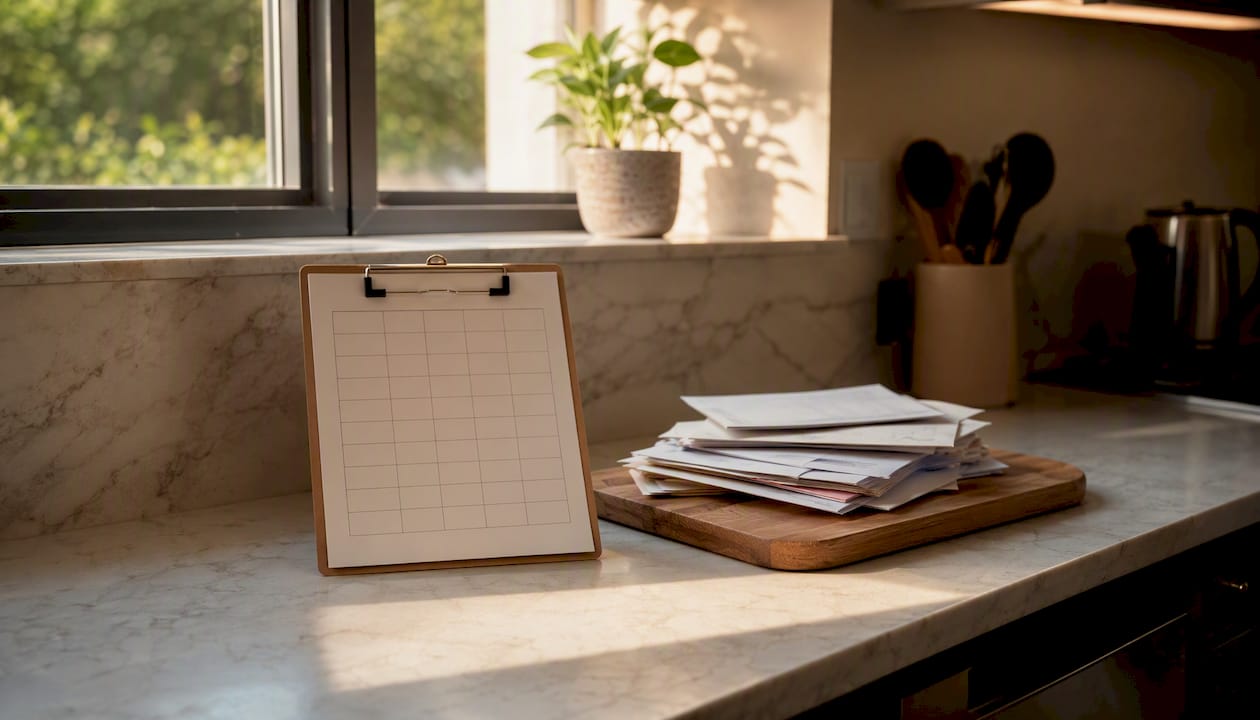
Tools help make this concrete rather than aspirational. A bill-splitting app such as Dongip removes the awkwardness of chasing someone for their share, a shared calendar flags whose turn it is for cleaning, and a simple shared note or spreadsheet keeps a record everyone can check rather than relying on memory. If you are still weighing up a shared tenancy, it is worth reading what to look for in a rental agreement before anyone signs anything.
A weekly ten-minute house meeting keeps small issues from compounding. A workable agenda: quick round of "anything bothering anyone this week", review of the chore rota, any bills due, and one item flagged for next time if it needs longer discussion.
Pro Tip:Write the agreement on one page, get everyone to sign it, then photograph it and save the photo somewhere all housemates can access. A document nobody can find is not an agreement.
How to settle a current dispute: a step-by-step approach
Once a dispute exists, the order in which you handle it matters more than how eloquent you are.
Prepare first. Write down the specific facts (dates, amounts, what was agreed) and decide what outcome you actually want, not just what you are annoyed about.
Have a private conversation. One-to-one, calm, at a neutral time, not immediately after the triggering incident.
Escalate to a house meeting if the private chat doesn't resolve it, so everyone hears the same version and agrees to the same fix.
Put the agreement in writing, even briefly, so nobody can later claim they don't remember agreeing.
Bring in mediation or the landlord only if steps one to four fail repeatedly.
Three scripts worth keeping in your back pocket:
Calm opener: "I've noticed the dishes pile up most evenings, and I feel like I'm the one clearing them. Can we work out a fairer system?"
Firm boundary: "I need quiet after 11pm on weeknights. If that's not workable for you, we need to talk about it properly rather than it just continuing."
Time-limited student version: "I've got exams for the next fortnight, could we agree on stricter quiet hours just until they're done, then go back to normal?"
Escalate to a mediator, landlord, or tenancy body when the same issue recurs after being raised directly, when money is owed and not being paid, or when you feel unsafe. Gather message screenshots, payment records, and dates before that conversation. Tenants Union guidance recommends respectful, direct communication first and mediation where that stalls, rather than jumping straight to a formal complaint.
When is it time to move out or change the tenancy?
Sometimes the healthiest fix is leaving, and it's worth knowing your practical options before you decide.
Subletting your room, if your tenancy agreement allows it.
Mutual re-letting, finding a replacement together so the landlord loses no rent.
Assigning the tenancy, transferring your obligations to someone else, if permitted.
Giving proper notice and accepting some overlap rent if you need to leave faster than the notice period allows.
Before you go, photograph the property's condition, take final meter readings, and get a written handover note signed by whoever remains. Check your tenancy agreement's notice clauses and whether you risk forfeiting rent or facing a deposit dispute for leaving early. A move-out deposit checklist is worth working through properly rather than relying on memory once you've already moved your things out.
Signs your living situation is unhealthy
Some situations go beyond ordinary friction. Watch for:
Repeated financial exploitation, such as a roommate consistently avoiding their share of bills.
Threats, intimidation, or harassment of any kind.
Someone deliberately blocking your access to shared spaces or your own room.
Persistent bullying that continues even after you've raised it directly.
The same boundary being crossed again and again despite clear requests to stop.
If you're losing sleep, feeling anxious about going home, or genuinely afraid, document every incident, tell someone you trust, and contact emergency services if you feel threatened. Keep evidence (messages, photos, dates) in case you need a landlord or mediator to intervene later.
What does research say about resolving roommate conflict?
The evidence is fairly consistent: avoidance feels easier in the moment and costs more later. The same 2024 study on roommate conflict found that students who used "harmony-maintaining" avoidance reported lower belonging and more psychological distress than those who addressed issues explicitly, even though direct confrontation felt riskier at the time.
Not every form of accommodation is healthy either. A 2023 study of over 800 undergraduate roommates found that compromising sometimes predicted increased victimisation and bullying rather than resolving it, while stronger social support reduced both. Giving in repeatedly to keep the peace can quietly train the other person to keep pushing.
Turn this into habits: raise issues with a specific example rather than a general complaint, pick a time when neither of you is rushed or upset, and write down what you agree to change. A one-line text after the conversation ("just to confirm, we're splitting the electricity bill 50/50 from now") does more to prevent repeat disputes than any amount of verbal reassurance.
Why empathy and structure both matter
Empathy de-escalates the moment. Structure, house rules, a written agreement, a regular check-in, stops the same fight from returning next month. Roommate disputes are ordinary, not a sign anyone has failed, and nearly all of them are solvable if you address them while they're still small.
Reduce roommate risk before it starts
A lot of roommate conflict traces back to who you moved in with in the first place, not just what happened afterwards. Hauzed is a trust-first rental marketplace that helps you avoid that gamble by connecting you with verified tenants and landlords instead of anonymous listings and unchecked messages.
Building a stronger, verified rental profile means the people reviewing your application (and the people you might end up sharing with) have already gone through identity checks, not just a name and a photo. That matters more than it sounds:
Verified profiles cut down on the anonymous, scam-prone messaging that leads to mismatched or unsafe living situations.
AI-assisted tenant matching helps surface people whose stated preferences and habits are closer to yours before you ever move in together.
Group applications let you and prospective housemates apply together as one coordinated household, rather than piecing things together after the fact.
If you're searching for your next place or trying to fill a room with someone who won't become your next dispute, explore Hauzed's rental marketplace to build a verified profile and start browsing with more confidence.
Raise the issue privately and specifically first, escalate to a house meeting if needed, put any agreement in writing, and only involve a mediator or landlord if the problem repeats after being addressed directly.
What are the signs of "roommate syndrome"?
Persistent tension, passive-aggressive messages instead of direct conversation, repeated boundary crossing, and a general sense of dread about going home are the clearest signs a shared living situation has become unhealthy.
What is the golden rule for roommates?
Say the uncomfortable thing directly and early, rather than avoiding it. Research consistently shows explicit communication produces better outcomes than staying quiet to keep the peace.
Is it common for roommates to fight?
Yes. Polling on UK shared housing found that roughly four in five people who've lived with housemates report disagreements, and cleaning is the single most common trigger.
How can I reduce the risk of roommate conflict before moving in?
Set clear written agreements on chores, bills, and guests before signing anything, and choose housemates through a verified platform like Hauzed rather than anonymous listings, since compatibility issues are far easier to prevent than to fix afterwards.