Comply with DPC and RTB: tenant identity checks for Irish landlords
22 de septiembre de 2026
10 min de lectura
Follow a staged, DPC- and RTB-aligned tenant ID workflow in Ireland: minimise data at viewing, log who checked what, and use Hauzed's secure verification...
Run a proportionate, staged verification workflow: gather almost nothing at the interest stage, check photo ID at viewing, and reserve PPSN or financial documents for your preferred applicant only. Follow the Data Protection Commission's data-minimisation guidance rather than collecting everything upfront, and use a secure verification flow with a clear audit trail so you can show exactly what you checked and when.
TL;DR:
Verify identities at the viewing stage using secure, GDPR-compliant digital systems to reduce sensitive data collection from uninterested viewers.
Collect PPSN, references, and income proof only from the applicant you plan to offer the tenancy to, not during initial interest or viewing stages.
Maintain detailed records of document checks, including who verified each item and when, to ensure compliance and facilitate future disputes or RTB inquiries.
Cross-check listing details across multiple platforms and verify landlord identities before accepting deposits or progressing to final agreements.
Use a staged workflow that aligns data collection with decision points, reserving detailed checks for the final applicant to minimize data liability and protect applicant privacy.
What does tenant identity verification actually prove?
Identity verification confirms that the person in front of you is who they claim to be. A document check matched against a passport, an Irish driving licence, or an Irish Residence Permit (IRP) card, sometimes paired with a selfie or biometric match, tells you the applicant isn't using a stolen or invented identity. That's genuinely valuable in a market where rental fraud is common enough that An Garda Síochána maintains dedicated guidance for victims.
What it does not prove is whether someone can pay the rent, will look after your property, or gets on with the neighbours. Landlords who treat "verified" as a synonym for "approved" are making a category error. The DPC's own guidance on prospective tenant data makes this distinction explicit: identity checks are a risk control, not a solvency guarantee.
Pair identity verification with the right evidence at the right stage:
Use references from a previous landlord or employer to assess behaviour and reliability.
Request payslips or bank statements only from the applicant you intend to offer the tenancy to, never from every viewer.
Treat identity, affordability, and suitability as three separate checks, run in that order, not one bundled screening step.
What do the DPC and RTB expect from Irish landlords?
Two regulators shape how you can legally run tenant screening services in Ireland, and they pull in slightly different directions if you're not careful.
The Data Protection Commission has warned landlords and agents directly that asking every viewer for PPS numbers, bank details, utility bills, and payslips before any tenancy offer generally breaches GDPR's data-minimisation principle. The DPC's "Know Your Data" session reinforces the timing point: data justified for the eventual tenant isn't automatically justified for the other twelve people who viewed the flat.
At the same time, the Residential Tenancies Board requires tenant PPSN and date of birth on the RTB1 tenancy registration form. If a tenant genuinely won't provide their PPSN, the RTB allows landlords to record that a reasonable effort was made instead of leaving the field blank.
Three practical steps keep you compliant with both:
Document your lawful basis for each category of data you collect, and note the stage at which you collected it.
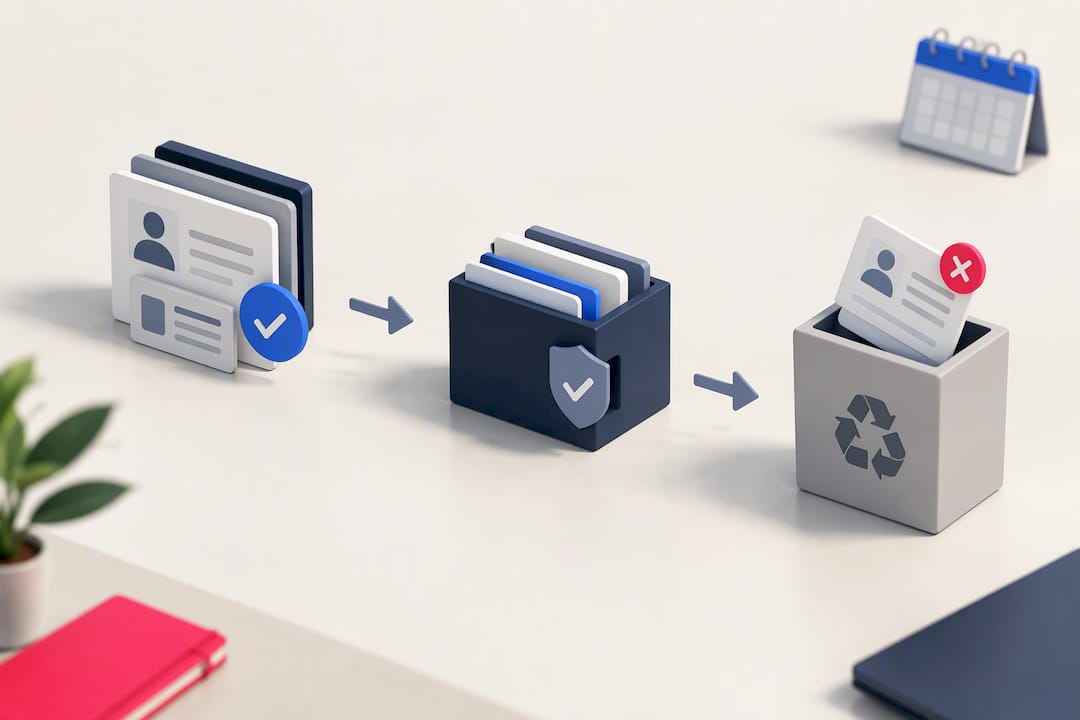
Limit retention: delete unsuccessful applicants' documents once the tenancy is filled, not months later.
Restrict access to identity documents to whoever handles the letting, and encrypt anything stored digitally.
Pro Tip:Keep a simple log noting what document you saw, when, and who reviewed it. If a data subject access request or an RTB query ever lands on your desk, that log is worth more than a folder of unsorted scans.
How should the staged verification workflow actually run?
Sequencing is the whole trick. Ask for too much too early and you're sitting on a pile of sensitive data for people you never house; ask for too little too late and your preferred applicant walks into the tenancy unchecked.
Expression of interest. Collect a name, contact details, and a couple of suitability questions (move-in date, household size, budget fit). No ID, no PPSN, nothing financial.
Viewing stage. Ask to see photo ID, a passport, Irish driving licence, or IRP card, either in person or through a secure digital verification flow. This confirms identity without yet building a data file on every attendee.
Preferred applicant stage. Once you've picked the applicant you intend to offer the tenancy to, request references, proof of income, and the PPSN needed for RTB registration, collected only at the necessary stage.
This progression follows the DPC's own recommended sequence: low-data interest, then viewing, then detailed checks reserved for the one person you're actually moving forward with.
Recordkeeping matters at every stage. Note who checked which document, when consent was given for its use, and how long you intend to keep it. Set a deletion date for unsuccessful applicants' files rather than letting them sit indefinitely on a shared drive or in an email inbox.
Pro Tip:If you're managing more than one property, a spreadsheet tracking "stage reached, document seen, date reviewed" per applicant takes ten minutes to set up and saves you from ever wondering later whether you actually checked someone's ID.
How do you spot and prevent rental fraud?
Identity checks protect you from a false applicant. A separate set of checks protects you and genuine applicants from a false landlord, agent, or listing altogether. Garda guidance treats the property, the person, and the payment as three distinct verification points, and that framing is worth adopting on both sides of a letting.
Cross-check the listing address and photos across more than one platform before engaging further.
Confirm the landlord or agent's identity in person, and verify official contact details independently rather than trusting only what's in the listing.
Never send deposits or advance payments before meeting or viewing; a secure or traceable payment method beats cash handed over on trust.
Treat pressure to pay quickly, inconsistent paperwork, refusal to meet, or rent priced well below market as red flags worth pausing on.
How do digital ID providers fit into the workflow?
A digital identity service provider, often shortened to IDSP, runs the viewing-stage document check without you ever handling the physical file. The applicant uploads their passport, driving licence, or IRP card through a secure interface; the system checks the document for authenticity, matches it against a selfie, and timestamps the result into an audit trail you can point to later.
The advantage isn't just convenience. It reduces how many sensitive scans sit in your inbox or on your phone, and it gives you a documented record if a dispute or data request ever arises. The limitation stays the same as any identity check: a passed verification confirms who someone is, not whether they can afford the rent.
Before choosing a provider, check for:
GDPR-compliant processing with a clearly stated retention policy.
A defined scope: what exactly gets checked, and what "verified" means on the resulting badge or profile.
Confirmed availability for Irish-issued documents, including the IRP card.
Audit logs you can retrieve if a tenancy dispute or RTB query requires evidence of what was checked.
Pro Tip:Ask any provider you're considering to show you a sample verification record before you commit. If it doesn't clearly separate "identity confirmed" from "financially approved," that ambiguity will eventually cause a misunderstanding with an applicant.
How does Hauzed support this workflow in practice?
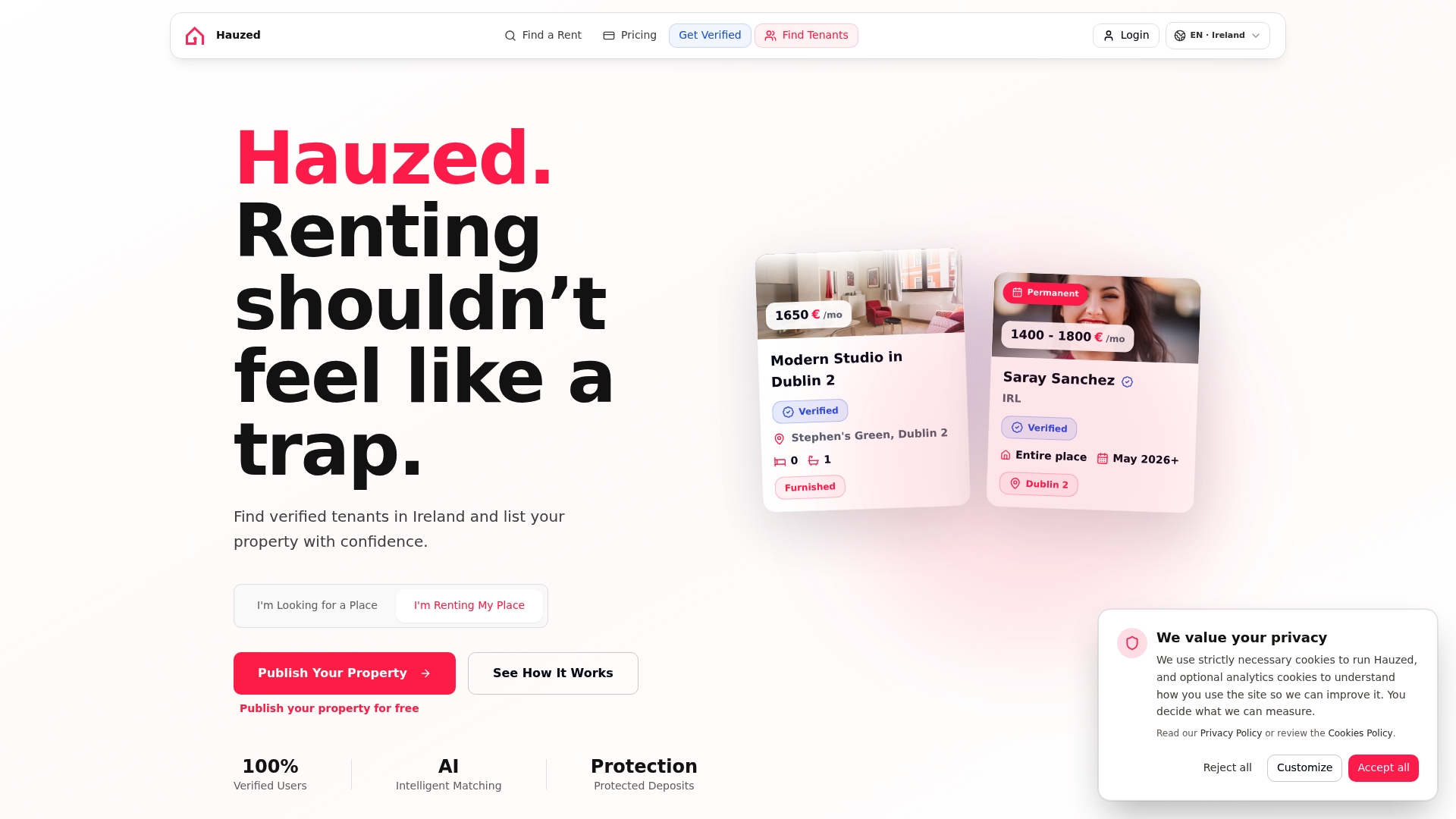
Hauzed builds the staged approach into the platform rather than leaving landlords to assemble it from spreadsheets and email threads. Tenants complete identity verification through a secure flow before their profile becomes visible to landlords, so you're reviewing verified interest instead of an anonymous message.
Verified badges on tenant profiles record that identity was checked, without implying financial approval or guaranteed suitability.
Document uploads happen through secure, consent-based flows rather than over chat or email attachments.
Hauzer, the platform's AI matching agent, surfaces suitable verified tenants for your property, cutting down the manual filtering that eats into a landlord's evening.
Chat and viewing scheduling stay within the platform, keeping a record of who requested what and when.
The badge system deliberately avoids conflating "identity verified" with "tenant approved." That distinction stays with you, the landlord, at the final decision point.
Verification as risk management, not gatekeeping
The temptation with any screening tool is to over-collect, because more data feels safer. It usually isn't. A landlord holding PPSNs and bank statements from twenty viewers has taken on a data liability without gaining twenty times the protection.
The better mindset treats verification as proportionate risk management tied to the decision you're actually making. A viewing doesn't need a payslip. A tenancy offer does need proper checks. Match the depth of the check to the stage of the decision, and you protect both your own exposure and every applicant's privacy.
— Hauzed
Rent with less risk and less admin
Hauzed gives you an Ireland-focused way to run this staged workflow without building it yourself from spreadsheets, email threads, and WhatsApp messages. Instead of chasing down documents from every viewer, you receive tenant interest that's already been through secure identity verification.
Landlords on the Free Plan can list one active property and start receiving verified interest immediately. If you're managing multiple properties or want AI-assisted matching handling the filtering for you, the AI Team agents at €19.90 per month help surface suitable tenants and follow up on conversations without you answering every message manually. For a fully managed setup, the Full Assistance Pack is a one-off €99.90 service. Browse rental properties currently listed on Hauzed or check the pricing page to see which plan fits your portfolio.
Check photo ID, a passport, Irish driving licence, or IRP card, at viewing stage, then confirm references and proof of income only for your preferred applicant. A secure digital verification flow, such as the one built into Hauzed, can handle the document check and keep an audit trail without you storing scans yourself.
How often can a landlord inspect my house?
There's no fixed statutory number of inspections in Irish law, but any inspection requires reasonable notice, and access must be agreed rather than assumed. Inspections should be proportionate and infrequent enough to respect the tenant's right to quiet enjoyment of the property.
What are the new landlord rules in Ireland for 2026?
Rules around RTB registration, rent pressure zones, and data handling continue to evolve, so check the RTB's own registration guidance directly rather than relying on secondhand summaries. The core identity and data protection expectations covered in this guide, staged collection and GDPR compliance, remain the constant baseline regardless of other changes.
Do landlords have to replace mattresses?
Irish minimum standards regulations require rental properties to be maintained in a proper state of structural repair and free from damp, but they don't set a fixed replacement schedule for furnishings like mattresses. Landlords should replace bedding and furnishings that are worn, damaged, or unhygienic as part of general upkeep obligations.