How to speed up property listing approvals in the UK
10 de agosto de 2026
11 min de lectura
Discover quick tips to speed up your property listing approvals in the UK. Streamline your workflow and attract better-qualified tenants now!
Confirm your PRS database entries are active, your listing data is complete, and your tenant qualification workflow is live before you advertise. Those three steps, done in sequence, remove the most common causes of delay.
Three things you can do in the next 15 minutes:
Log into the designated PRS database and verify that both your landlord entry and your dwelling entry are active, with unique identifiers ready to paste into your advert copy.
Open your draft listing and cross-check the address format, rent figure, tenancy type, and photo count against your marketplace's required fields.
Set up an automated reply to new enquiries that requests proof of income, photo ID, and Right to Rent documents before a viewing is confirmed.
Pro Tip:Pre-upload your key tenant documents and confirm your PRS identifiers before you publish. Listings that go live with verified data and a qualification gate already in place attract faster, better-qualified applications from the start.
Key takeaways
Getting listings live and tenants approved faster comes down to three disciplines: compliance readiness before you advertise, document capture at enquiry rather than after viewing, and automation that removes manual handoffs from the pipeline.
Point
Details
PRS registration is a hard gate
Confirm active landlord and dwelling entries, with unique identifiers, before publishing any advert.
Pre-qualify before viewings
Capture affordability, Right to Rent, and employment type at enquiry to avoid wasted viewings.
Automate document follow-up
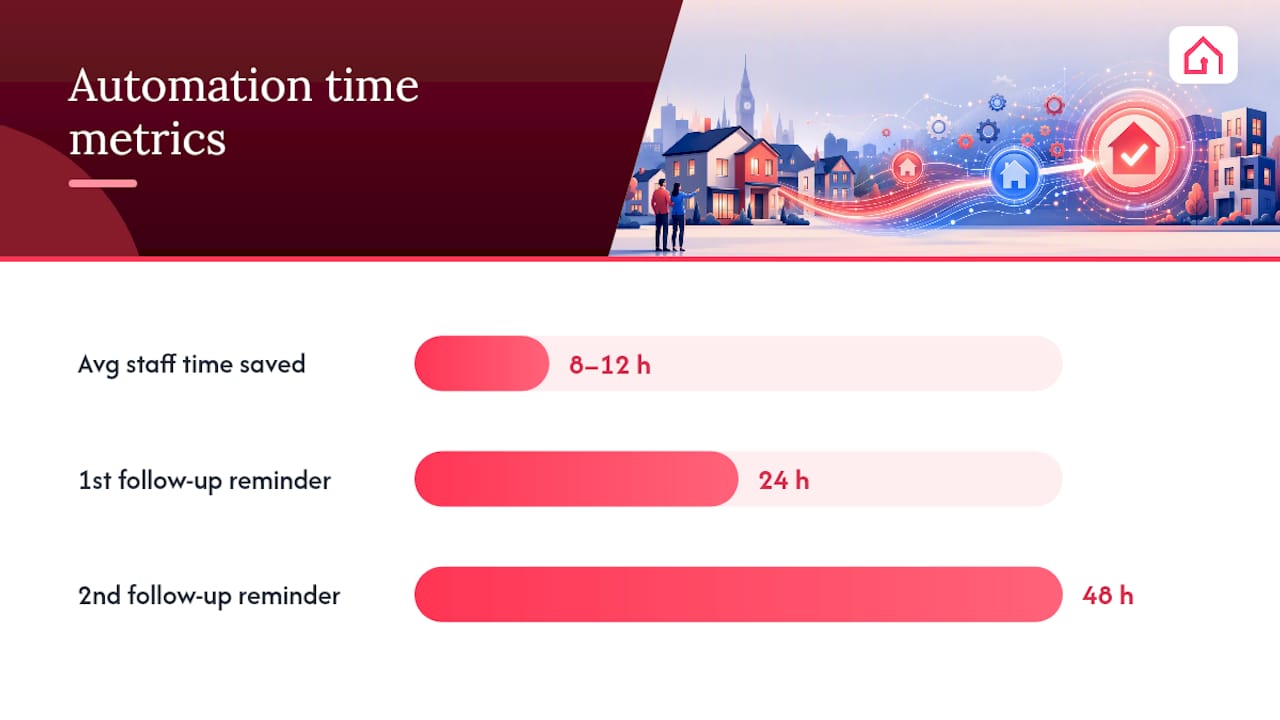
Send reminders at 24 and 48 hours; applications with complete documents move to referencing immediately.
Referencing takes 3 to 5 working days
Send reference requests the same day documents arrive to reach the lower end of that range.
Hauzed consolidates the workflow
Bulk publishing, AI matching via Hauzer, and secure document capture reduce manual steps across the pipeline.
#speed up property listing approvals#expedited property approval#faster approval for real estate#quick property approvals#streamline listing process#reduce property listing delays#how to speed up listings#property listing fast track#efficient listing approval process
Confirmation that neither entry is pending renewal or under review.
Listing data that commonly fails validation:
Display address formatted to match the database entry exactly (flat number, postcode).
Council tax band stated correctly for the property.
Property type mapped to the marketplace's taxonomy (flat, terraced house, HMO room).
Rent and deposit figures consistent across all fields.
Tenancy type selected (Assured Shorthold Tenancy or equivalent).
Media and metadata:
Minimum photo count met (most portals require at least five images).
Photos in JPEG or PNG format, under the portal's file-size limit.
Description within the character range and free of prohibited terms (no "no DSS", no discriminatory language).
Operational checks:
Correct landlord or agency account linked to the property.
Team permissions set so the right negotiator can edit and publish.
Pro Tip:Keep a single shared document with your PRS identifiers for every property. Paste them into listings rather than retyping, and you eliminate transcription errors at source.
How to speed up tenant approvals with the right documents
Quick qualification and formal referencing are different steps, and conflating them wastes time. Qualification happens before a viewing; referencing happens after an offer. Getting that sequence right is where most agencies recover days.
Pre-viewing qualification covers six signals: affordability (rent under a reasonable proportion of gross income), Right to Rent status, employment type, move-in timeline, rental history, and occupancy. Capture these at enquiry, not at application, and you avoid booking viewings for applicants who will fail referencing anyway.
At the application stage, request:
Photo ID (passport or driving licence).
Proof of income (recent payslips or a self-assessment summary).
Right to Rent documentation where applicable.
A previous landlord contact for reference.
Documents should be collected through a secure upload flow with explicit consent, not via chat or email. Store only what you need for the referencing decision, and confirm to the applicant how their data will be used. Hauzed's platform handles document uploads with privacy controls built in, so sensitive files stay out of unprotected inboxes.
Once documents are in, a full vetting process typically takes three to seven working days. Employer and previous landlord references are the usual bottleneck, often taking 48–72 hours to return. Sending reference requests the same day documents arrive, rather than waiting for a manual review, compresses that window noticeably.
How automation and AI workflows cut approval time
The biggest time savings in the approval pipeline come from removing manual handoffs. Each point where a human must remember to send a message, chase a document, or update a status is a potential delay of hours or days.
Core automation blocks to build or enable:
Real-time portal publishing with pre-submission validation (catches errors before they reach the marketplace).
Automated qualification chat triggered on enquiry, collecting the six pre-viewing signals.
API-based referencing requests sent automatically when an application is marked complete.
Automated follow-up reminders for missing documents (24 hours, then 48 hours).
Webhook-based status updates so the landlord sees progress without chasing the agent.
A practical workflow example:
Tenant submits enquiry via marketplace.
Automated message requests qualification details and document uploads.
System checks completeness and flags missing items.
Complete application triggers an instant referencing request to the employer and previous landlord.
Landlord receives a notification with a summary and a one-click approval or decline.
Approval triggers an auto-generated tenancy document for digital signature.
Automation pipelines of this kind can save 8–12 hours of staff time per tenancy in reported deployments. For a busy agency handling multiple lets a month, that is a meaningful reduction in overhead.
Pro Tip:Build an exception queue so humans only review applications that fail an automated check. Everything that passes moves forward without a manual touchpoint, and your team's attention goes where it actually changes the outcome.
Viewing and scheduling practices that keep approvals moving
No-shows and slow decisions after viewings are a quiet drain on approval speed. A few structural changes to your scheduling process fix most of it.
Send a confirmation message immediately after a viewing is booked, with the address, time, and a clear instruction to cancel at least two hours in advance if plans change. Follow up with a reminder 24 hours before, then again two hours before. That two-touch reminder pattern cuts no-shows significantly without requiring any manual effort if it is automated.
For high-interest properties, consider a short-deadline private viewing window: offer the first two or three enquirers a 48-hour window to view and submit documents, with a clear note that the property will be opened to wider applicants after that. This creates genuine urgency without manufactured pressure.
Pro Tip:After every viewing, send a short message within the hour: "Thanks for viewing [address]. If you'd like to proceed, please submit your documents by [date, 48 hours away]. Happy to answer any questions." That single message, sent consistently, moves more applicants to application than any follow-up call.
What causes approval delays and how to fix them
Most delays trace back to a small number of recurring failures. Knowing the pattern makes them preventable.
PRS registration lapse: The landlord or dwelling entry has expired or was never completed. Fix: check registration status at instruction, set a calendar alert 30 days before renewal, and make active entries a condition of accepting a new instruction.
Listing vs database mismatch: The address or identifier in the advert does not match the database entry. Fix: copy identifiers directly from the database rather than retyping; use a one-source-of-truth property record.
Photo or format validation failure: Images are the wrong format, too large, or too few. Fix: run a media checklist before submission and convert files to JPEG if in doubt.
Incomplete tenant documents: The applicant submitted an enquiry but not their ID or income proof. Fix: make document upload a required step before a viewing is confirmed, not an optional extra.
Slow referee returns: Employers or previous landlords take days to respond. Fix: send reference requests the same day documents arrive and follow up automatically at 48 hours.
Good templates save time and keep communications consistent. Adapt these to your tone and platform.
Pre-publishing compliance request (to landlord at instruction):
Conditional approval message (to applicant):
Missing-docs reminder (automated, 24 hours after enquiry):
Use merge fields for property address, applicant name, and deadlines. Set an escalation rule so that if documents are still missing after 48 hours, the enquiry is flagged for manual review rather than left open indefinitely.
How long does each stage actually take?
Setting realistic expectations helps you spot when something is genuinely stuck.
Stage
Manual path
Automated path
Listing validation and publishing
2–8 hours
Under 30 minutes
Viewing-to-application
2–5 days
1–2 days
Reference turnaround
3 to 5 working days
2–4 working days
Digital signature
1–3 days
Same day to 24 hours
Pre-submission validation can reduce time-to-live from hours to minutes by catching errors before they reach the marketplace. The referencing window of three to seven working days is largely outside your control, but sending requests immediately and chasing at 48 hours reliably brings it toward the lower end.
Registration fees and plan tiers also affect timing. PRS database registration carries fees set by the scheme operator; confirm current rates directly with the database. Marketplace plan upgrades, such as moving to a Pro or Max tier on Hauzed, unlock bulk publishing, broader AI usage, and priority support, all of which compress the manual steps in the table above.
Why structured workflows give agencies a real advantage
The agencies that fill properties fastest are not the ones with the most listings. They are the ones with the tightest processes.
A single source of truth for property data, where the address, identifiers, rent, and media are stored once and pushed to every channel from there, removes the transcription errors and version conflicts that cause rejections. When that data feeds a real-time publishing API, a listing that would have taken a negotiator half a day to prepare and submit goes live in under an hour.
Automated qualification and reminder workflows change the conversion rate from enquiry to application. Applicants who receive an immediate, clear request for documents submit them faster than those who receive a vague "we'll be in touch." The difference is not marginal. Agencies that have introduced structured follow-up report noticeably shorter void periods, because the pipeline moves without waiting for a negotiator to remember to send the next message.
Hauzed helps you publish faster and approve with confidence
Fewer voids, less message chaos, and verified applicants from the first enquiry: that is what a structured rental workflow delivers, and it is what Hauzed is built around.
Hauzed maps directly to the steps in this guide. Bulk publishing and draft management get listings live faster. Hauzer, the AI matching agent, surfaces verified tenant profiles so you are reviewing qualified candidates rather than sorting anonymous messages. Echo handles follow-up and smart replies, so no enquiry goes cold while you are managing other properties. Lia supports leasing conversations where available. Document capture happens through secure, consent-based flows, keeping sensitive data out of email threads.
Pro and Max plans unlock the automation depth that compresses timelines: more active properties, broader AI usage, team accounts, and priority support. See verified tenant profiles on Hauzed and explore plan options, or visit Hauzed to get started with a listing today.
The most common blockers are missing or inactive PRS database entries, validation errors in listing data (address format, property type, photo count), and incomplete required fields. Confirm your unique identifiers are active before submitting.
How long does tenant referencing take in the UK?
A full vetting process typically takes three to seven working days. Employer and previous landlord references are the usual bottleneck, often returning in 48–72 hours. Sending requests immediately when documents arrive keeps the process at the lower end.
Can automation genuinely speed up the approval process?
Yes. Automated qualification, document reminders, and API-based referencing requests can reduce staff time per tenancy by 8–12 hours in reported deployments, compressing the enquiry-to-approval timeline from days to hours in many cases.
What documents should landlords request at application?
Request photo ID, proof of income (payslips or self-assessment summary), Right to Rent documentation where applicable, and a previous landlord contact. Collect these through a secure upload flow with explicit consent, not via chat or email.
How does Hauzed help agencies speed up listing approvals?
Hauzed combines bulk publishing, AI tenant matching through Hauzer, automated follow-up via Echo, and secure document capture in one platform, reducing the manual steps between listing and signed tenancy.