Rent Out a Dublin Property: Register with RTB (€40) and Cut Admin
31 August 2026
12 min read
Register your Dublin tenancy with RTB, follow RPZ rent rules, meet safety and tax duties, and use a less admin workflow to cut screening time.
Yes, you can rent out a property in Dublin right now, provided you register the tenancy with the RTB and follow the rent, repair and anti-discrimination rules that come with it. The headline actions are straightforward: register within the required timeframe, set the rent lawfully, get the property safety-ready, and pick a workflow, whether that's a full agency, doing it yourself, or a platform that handles the screening and admin for you.
TL;DR:
Landlords in Dublin must register each tenancy with the RTB within the legal timeframe, paying a fee of €40 per tenancy, to remain compliant.
Rent in Dublin is capped in Rent Pressure Zones, permitting only annual increases based on inflation measures like HICP, with the RTB rent calculator essential for setting lawful rates.
All rental properties must meet strict safety standards, including annual gas servicing, functioning smoke and carbon monoxide alarms, and proper electrical safety, to avoid enforcement issues.
Maintaining detailed records of income, expenses, repairs, and correspondence is crucial for tax compliance and effective dispute resolution with the RTB.
Using verified platforms like Hauzed simplifies tenant screening, reduces administration, and helps landlords manage multiple properties efficiently, especially in high-demand Dublin markets.
#best time to rent dublin#dublin renting guide#how to rent property in Dublin#vacation rentals Dublin#property rental Dublin#best areas to rent in Dublin#Dublin rental market#renting out your home Dublin#short-term rental Dublin#landlord responsibilities Dublin#Dublin property management services#rent out property dublin#letting property Dublin#how to rent in dublin#how to rent a house in dublin
How to rent out property in Dublin: a step-by-step checklist
Renting out a home in Dublin isn't complicated once you know the order of operations. Most landlords who run into trouble have skipped a step, not because they're careless, but because nobody laid out the sequence for them. Here's the order that keeps you compliant and saves you from redoing work later.
Confirm your position as landlord. Check the deeds, mortgage terms, and any management company rules that might restrict letting the property, then decide whether you're creating a fixed-term or periodic tenancy.
Gather the property's core facts. You'll need the full address, Eircode, and BER rating if one exists, since all three are required for RTB registration.
Register the tenancy with the RTB. Most private landlords must register within the required timeframe of the tenancy starting, and a basic registration fee of €40 applies per tenancy.
Set the rent within legal limits. If the property sits in a Rent Pressure Zone, which covers most of Dublin, you can only increase rent once every year, capped by inflation measured by HICP. Use the RTB rent calculator before issuing any rent-setting notice.
Handle safety checks and repairs. Fix anything outstanding, take dated photographs of every room, and write an honest, accurate listing description.
Run viewings and screen consistently. Apply the same questions and criteria to every applicant, sign a written tenancy agreement, and log the deposit amount and date received.
Pro Tip:Book your BER assessment before you list the property. A poor or missing rating puts off serious tenants faster than almost anything else, and it takes a few weeks to schedule an assessor during busy periods.
Skipping the registration step is the single most common mistake among first-time Dublin landlords, usually because they assume it happens automatically through a letting agent. It doesn't. The legal responsibility sits with you.
How is rental income taxed, and what records do you need to keep?
Rental income in Ireland falls under Schedule D Case V, a distinct tax category from your salary or business income. You calculate a surplus or deficiency for each property separately. Owning three flats in Dublin doesn't let you pool the income and expenses together into one figure; Revenue requires a separate computation per property, and you must retain those records for six years.
Allowable deductions typically include mortgage interest (subject to restrictions), letting agent fees, repairs, insurance, and the RTB registration fee itself. What you can't do is average a profitable property against a loss-making one when working out your tax bill. Each stands alone.
Keep every invoice, bank statement, and rent receipt organised by property and by tax year. If Revenue ever queries your return, the landlords who can produce a clean folder within minutes are the ones who avoid drawn-out correspondence. A shared spreadsheet with dated entries works fine. What matters is consistency, not sophistication.
If you're renting through an agency or a platform, ask whether they can export payment histories automatically. It removes one more manual task from your annual return and reduces the risk of a missing month throwing off your calculations.
What must a Dublin tenancy agreement legally include?
A tenancy agreement isn't just a formality signed on move-in day. Certain terms are legally required regardless of what you and the tenant might informally agree. The agreement must state the rent amount, how and when it's paid, the deposit amount, the address of the property, and the names of all parties.
You'll also need to decide between a fixed-term lease and a periodic (rolling) tenancy. A fixed-term contract locks both sides in for a set period, usually a year, while a periodic tenancy continues indefinitely until either party gives proper notice. Most Dublin landlords now default to periodic tenancies, since tenancy protections under Part 4 of the Residential Tenancies Act apply regardless of the contract type once a tenant has been in place for six months.
Anti-discrimination law adds another layer here. You cannot refuse an applicant based on gender, family status, age, disability, race, or the fact that they receive a state housing support like HAP. Screening criteria need to be consistent and documented for every applicant, not adjusted case by case.
Written agreements protect you as much as the tenant. A clause covering notice periods, subletting permissions, and who's responsible for minor repairs saves arguments later. Verbal agreements are technically valid tenancies too, but they leave you with almost nothing to point to if a dispute arises.
What safety standards apply to rental properties in Dublin?
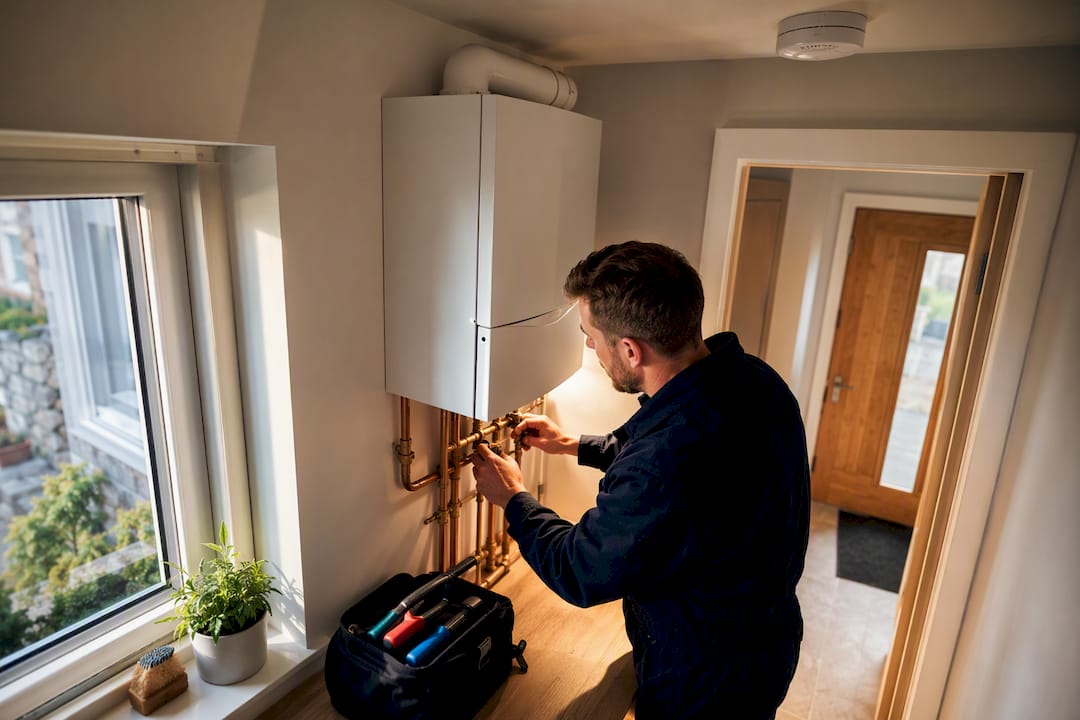
Every rental property in Dublin must meet minimum physical standards, and these aren't optional extras. Gas appliances need annual servicing by a registered gas installer, and any gas certificate should be kept on file alongside your other property records. Fire safety requires working smoke alarms on every floor, a carbon monoxide alarm near any solid fuel or gas appliance, and clear escape routes that aren't blocked by furniture or storage.
Electrical installations must be safe and properly maintained, with sockets, wiring, and any included appliances in good working order at the start of the tenancy. If you're letting a multi-unit building or converting a house into flats, additional fire safety obligations kick in, including fire doors and, in some cases, an emergency lighting system.
These standards exist under the Housing (Standards for Rented Houses) Regulations, and local authorities can inspect properties to check compliance. A failed inspection can hold up rent increases or, in serious cases, lead to enforcement action against the landlord.
Get an electrician and a gas engineer to sign off before your first viewing rather than after a tenant moves in and raises a concern. It's far cheaper to fix a faulty socket now than to deal with an emergency repair request three months into a tenancy, and it removes one more thing that could turn into a dispute later.
How does RTB dispute resolution work for landlords?
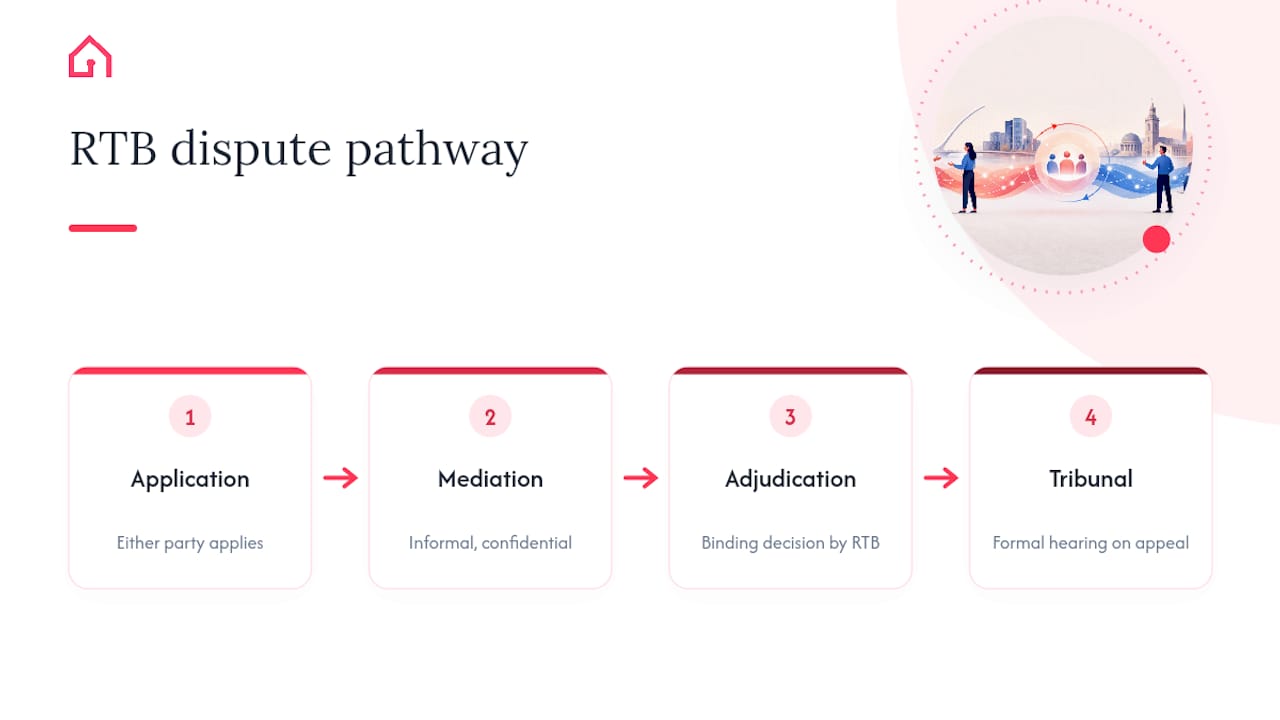
Most tenancy disputes in Dublin, whether over rent arrears, deposit deductions, or repair obligations, go through the RTB's dispute resolution service rather than the courts. The process starts with an application, which either party can submit, followed by an attempt at mediation. Mediation is informal and confidential, and a surprising number of disputes settle here simply because both sides get to explain their position to a neutral third party.
If mediation fails or either side declines it, the case moves to adjudication, where an RTB adjudicator reviews evidence and issues a binding determination. Either party can appeal an adjudicator's decision to a Tenancy Tribunal, which holds a more formal hearing.
Repairs are one of the most common flashpoints. If you don't address a legitimate repair request within a reasonable time after being notified, the tenant may carry out the repair themselves and deduct the cost from rent. That single rule catches out more landlords than almost any other provision in the Act, usually because "reasonable time" gets interpreted generously by adjudicators when a landlord has gone quiet on messages.
Keep every repair request and your response in writing. A dated email thread showing you acted promptly is often the difference between winning and losing a dispute you didn't expect to end up in.
Does Local Property Tax affect rental properties in Dublin?
Local Property Tax applies to residential property owners in Ireland, and renting out a property doesn't exempt you from it. As the property owner, you remain liable for LPT regardless of whether you live in the property or let it to a tenant. The tax is based on the property's valuation band, and Dublin's higher average property values often push landlords into higher bands than owners in other counties.
LPT is a separate obligation from your income tax return, and paying it doesn't offset anything against your Schedule D Case V calculation in a direct way, though it may be an allowable expense against rental income depending on your circumstances. Keep your LPT payment confirmation with your other property records each year, since Revenue can cross-reference property ownership data when reviewing rental income declarations.
If you're renting out more than one Dublin property, each one carries its own LPT liability tied to its own valuation. Missing a payment on one doesn't just risk a penalty. It can also flag inconsistencies if your rental income return doesn't match the properties Revenue has on file for you. Building LPT into your annual property admin routine, alongside RTB registration renewal and your tax return, keeps the whole picture consistent.
What insurance do landlords need in Dublin?
Standard home insurance doesn't cover a property once you let it out, and this catches out more first-time landlords than any other gap in cover. You need a specific landlord insurance policy, which typically bundles buildings cover, and often contents cover if you're letting the property furnished, with landlord liability protection.
Buildings insurance covers the structure itself against fire, storm damage, and similar events, and most mortgage lenders require you to maintain it as a condition of the loan. Contents cover matters if you own the furniture, appliances, or fittings inside the property. If you're letting unfurnished, this matters less, but most Dublin rentals include at least a cooker, and some cover for fixtures is worth having regardless.
Landlord liability insurance is the piece that gets overlooked. It protects you if a tenant or visitor is injured on the property and holds you responsible, whether that's a fall on a broken step or an injury linked to a fault you should reasonably have fixed. Given the repair obligations already sitting on landlords under the Residential Tenancies Act, this cover pairs naturally with staying on top of maintenance requests.
Loss of rent cover is worth considering too, particularly if you're relying on rental income to cover a mortgage. It won't replace a tenant, but it cushions the gap if the property becomes temporarily uninhabitable through no fault of the tenant.
A landlord's view: what actually saves time in Dublin's rental market
Managing a two-bed in Dublin 8 last year meant forty enquiries in the first week, most from accounts with no profile and no real interest, just people hedging their bets. Switching to verified requests and structured screening cut the noise down to a handful of serious applicants and meant no-shows at viewings nearly disappeared. Tenant documents stayed inside a secure flow rather than sitting in a WhatsApp thread, which matters more than most landlords admit until they've seen how casually people share sensitive files over chat.
— Hauzed
Ready to rent out your Dublin property with less admin?
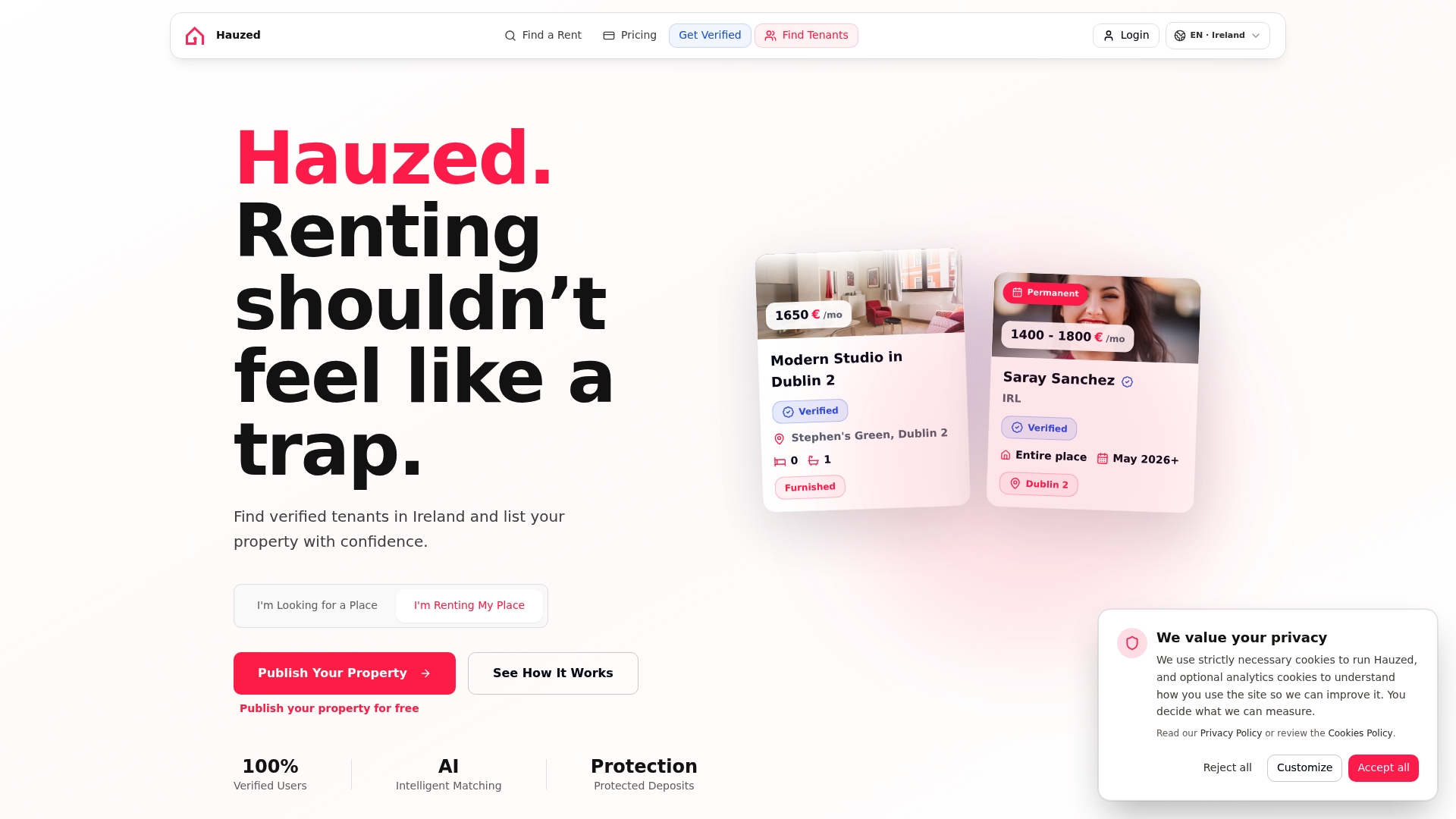
Hauzed is the alternative to sorting through dozens of anonymous WhatsApp messages and unverified enquiries every time you list a Dublin property. Instead of fielding scattered texts from people who never show up, you publish once and receive interest from tenants who've already completed identity verification and built a proper rental profile.
Setting up takes minutes. Add your property details, upload photos and your BER if you have one, and Hauzer starts surfacing tenant matches worth your time. Echo handles the back-and-forth replies so you're not typing the same answer to the same question a dozen times, and you can move from request to booked viewing without leaving the platform. The Free plan covers one active property with basic matching, while Pro adds more active listings, faster AI support, and priority handling if you're managing several units across County Dublin.
Head to the Hauzed landing page and publish your first listing today, or explore the plans if you're managing a small portfolio and want the Pro tier's extra matching and chat features from the start.
Yes. Any homeowner can rent out a property in Ireland, but you must register the tenancy with the RTB, comply with rent-setting rules if the property is in a Rent Pressure Zone, and meet minimum safety standards before letting.
What is the current rental market situation in Dublin?
Demand in Dublin consistently outstrips supply, with most of the city sitting inside a Rent Pressure Zone where rent increases are capped once every 12 months and linked to HICP inflation. This keeps competition high among tenants and puts pressure on landlords to screen carefully and respond quickly to serious enquiries.
What is the cheapest rent in Dublin?
Costs vary sharply by area, with shared rooms and student-focused lettings generally offering the lowest monthly rent, while family homes in central Dublin postcodes sit at the higher end. Areas further from the city centre and properties aimed at students or shared occupancy tend to offer more affordable options, as covered in Hauzed's guide to affordable student rentals in Dublin.
Where can I find long-term rentals in Ireland?
Long-term rentals are typically found through listing portals, letting agents, and increasingly through verified platforms that connect landlords directly with screened tenants, an approach detailed in Hauzed's guide to finding long-term rentals in Ireland. Hauzed is one option built specifically for this, pairing verified tenant profiles with direct landlord contact.
Do I need to register every tenancy with the RTB?
Almost all private residential tenancies in Ireland must be registered with the RTB, with a basic fee of €40 applying per tenancy and registration expected shortly after the tenancy begins, as set out in RTB guidance on who should register.